Launch offer — valid today only

📄 Digital book in PDF · read it on your phone or print it

Sambar, Fallow and Red Deer Butchery from Field to Freezer, All Drawn One Job on Every Page

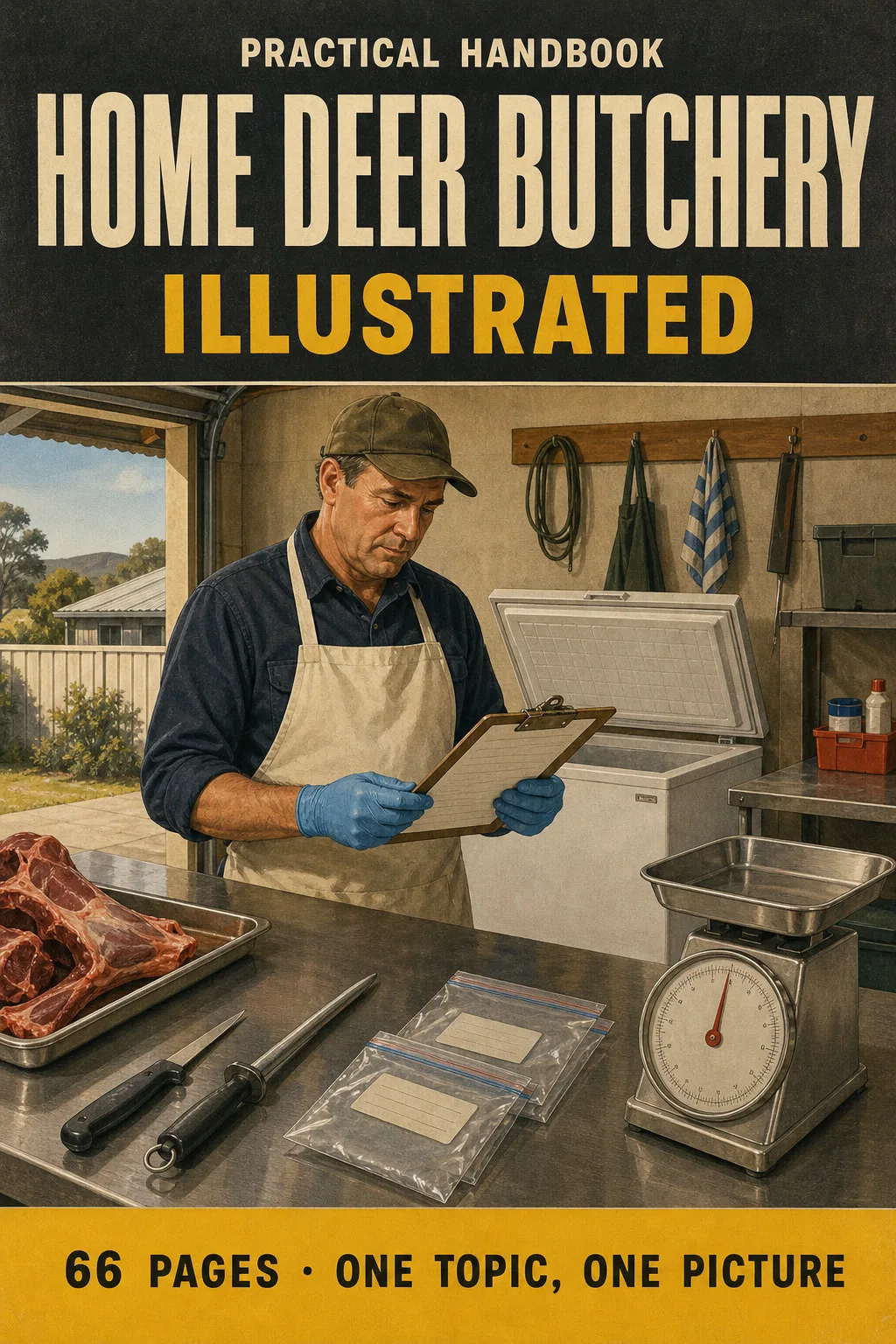
Field dressing in the heat, cooling and probing, cut maps for sambar, fallow and red, clean mince, juicy sausages, jerky and freezer packs. In °C and kilos, for Australian deer. Every topic has its own page: a clean drawing first, no blood, then what you need to remember. 66 illustrated pages.

START PROCESSING THIS WAY

🔒 Secure checkout · PDF by email · 30-day guarantee

Every topic, its own pageEvery step drawn, with the explanation beside it
66 illustrated pages8 parts, from the kit and set-up to the checklists and common mistakes
Up-to-date sourcesFSANZ food-safety guidance and AS 4464 hygiene principles
PDF by emailFormat

Look Inside the Book

Every page has a large drawing and a box with the temperatures, weights and steps you need to know:

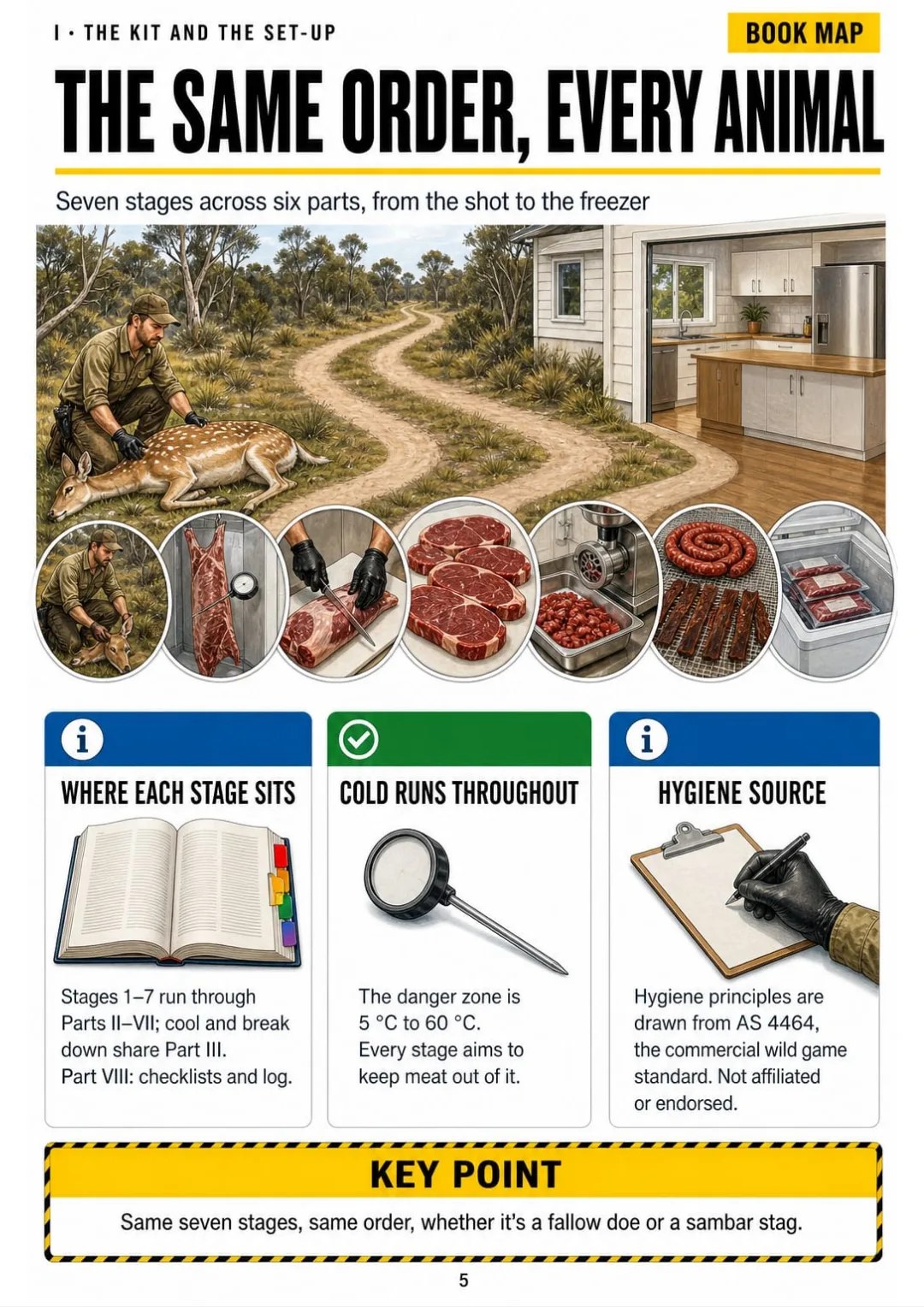
Field, cool, break down, cut, trim, process, freeze: 7 stages on one page
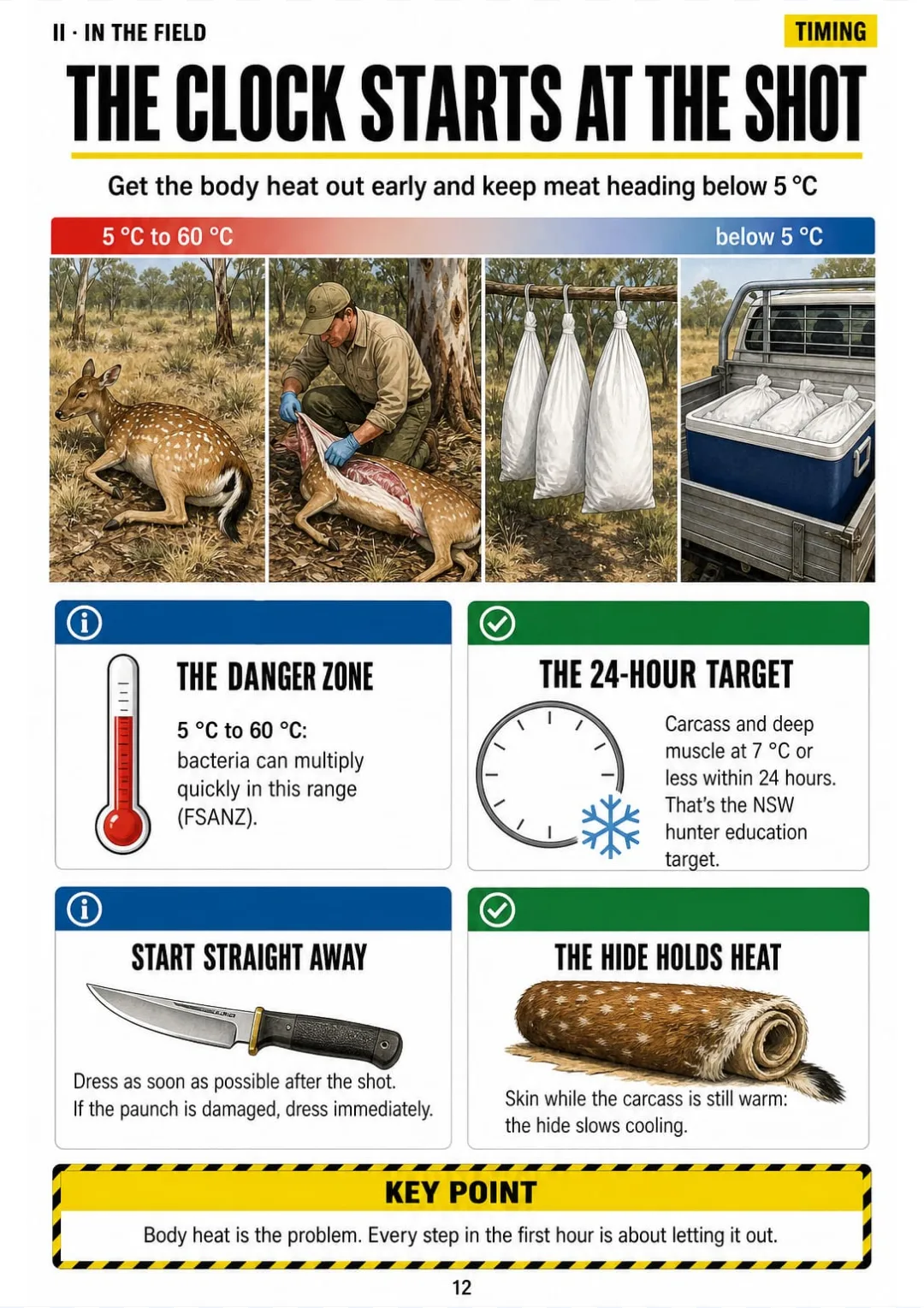
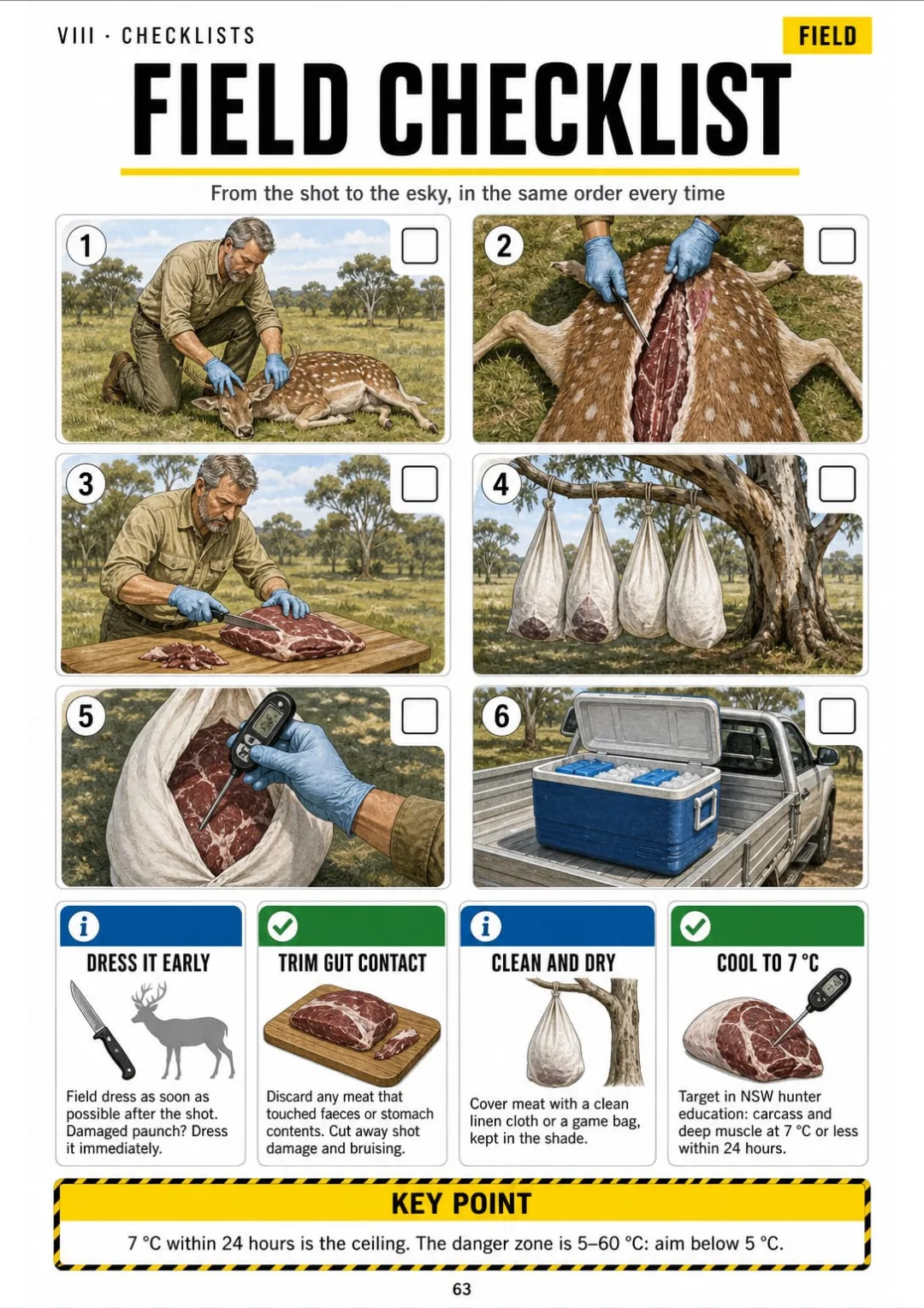
Danger zone 5–60 °C · NSW hunter-ed target: deep muscle 7 °C or less within 24 hours
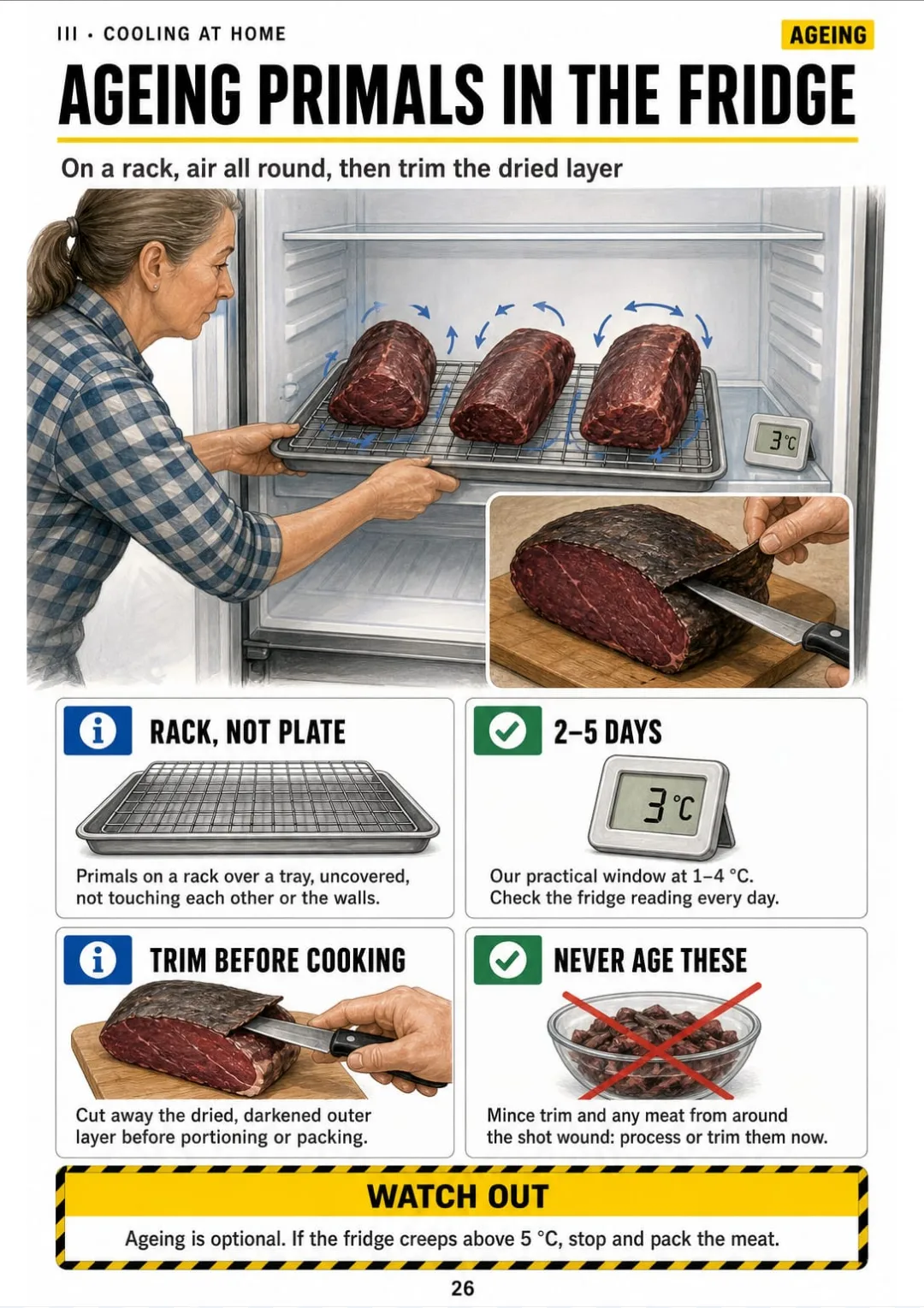
Primals on a rack, uncovered, 2–5 days at 1–4 °C, then trim the dried layer
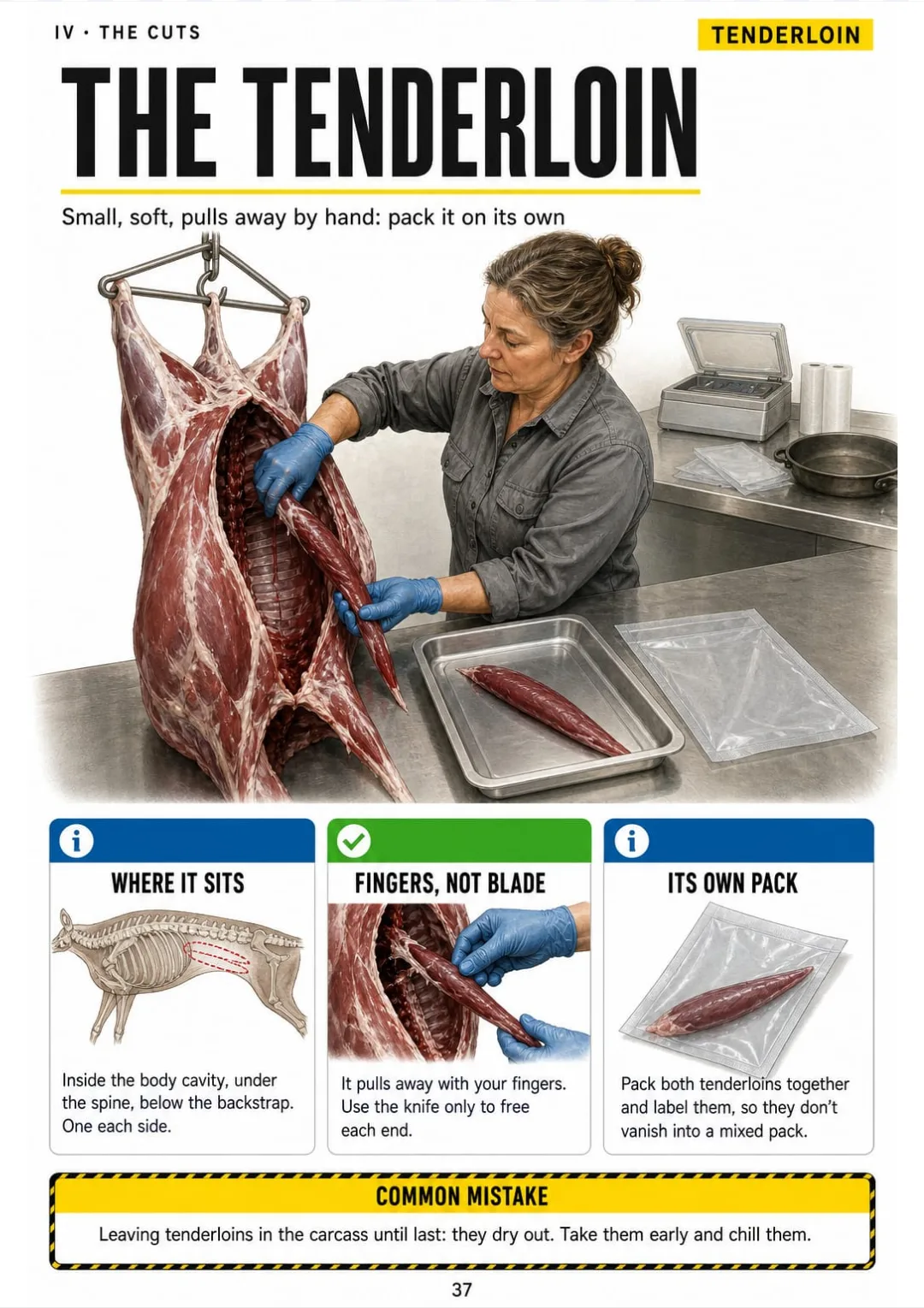
Tenderloin: pull it by hand, cook it fast, pack it on its own.
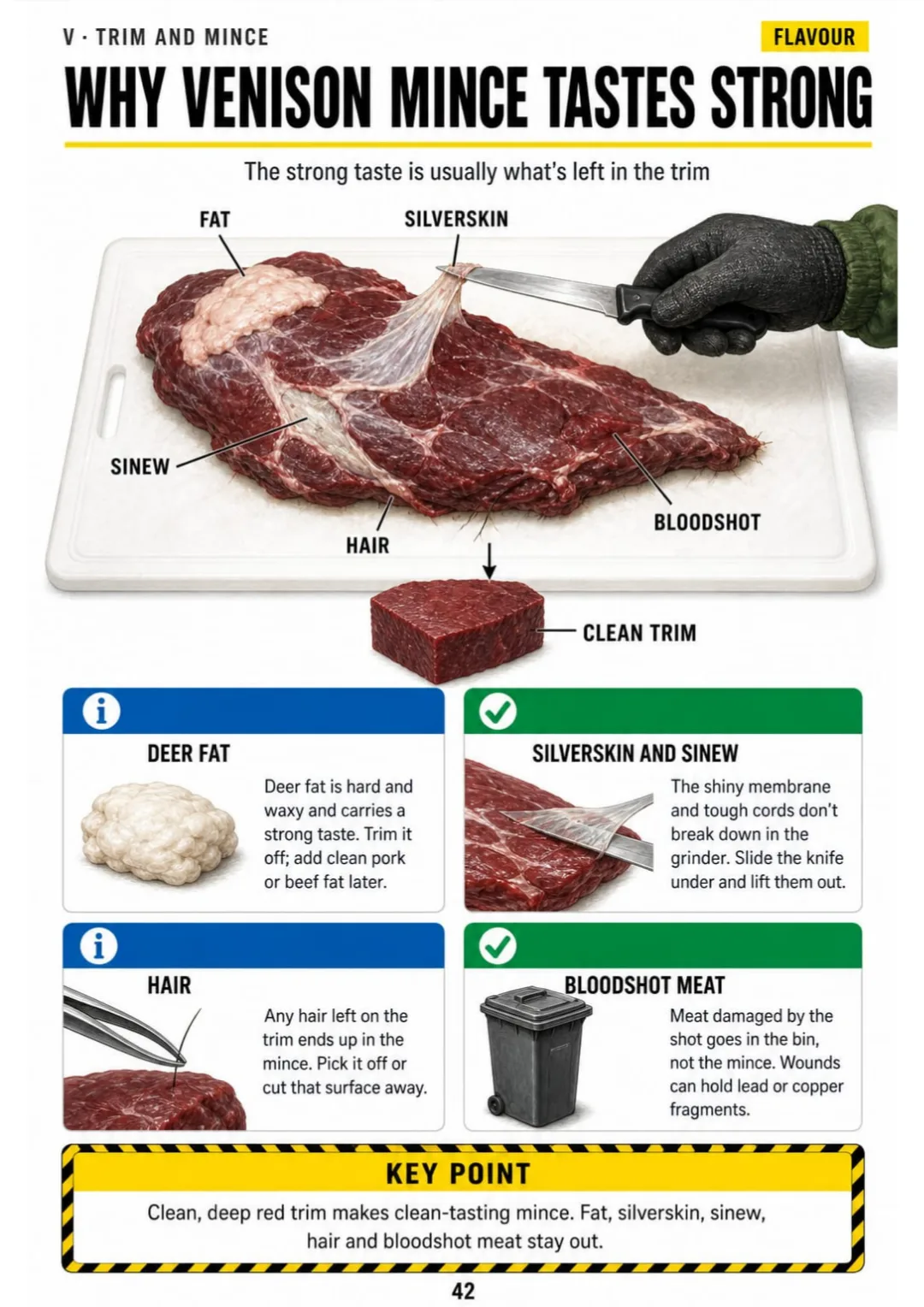
Fat, silverskin, sinew, hair and bloodshot meat: the five things that make venison mince taste strong
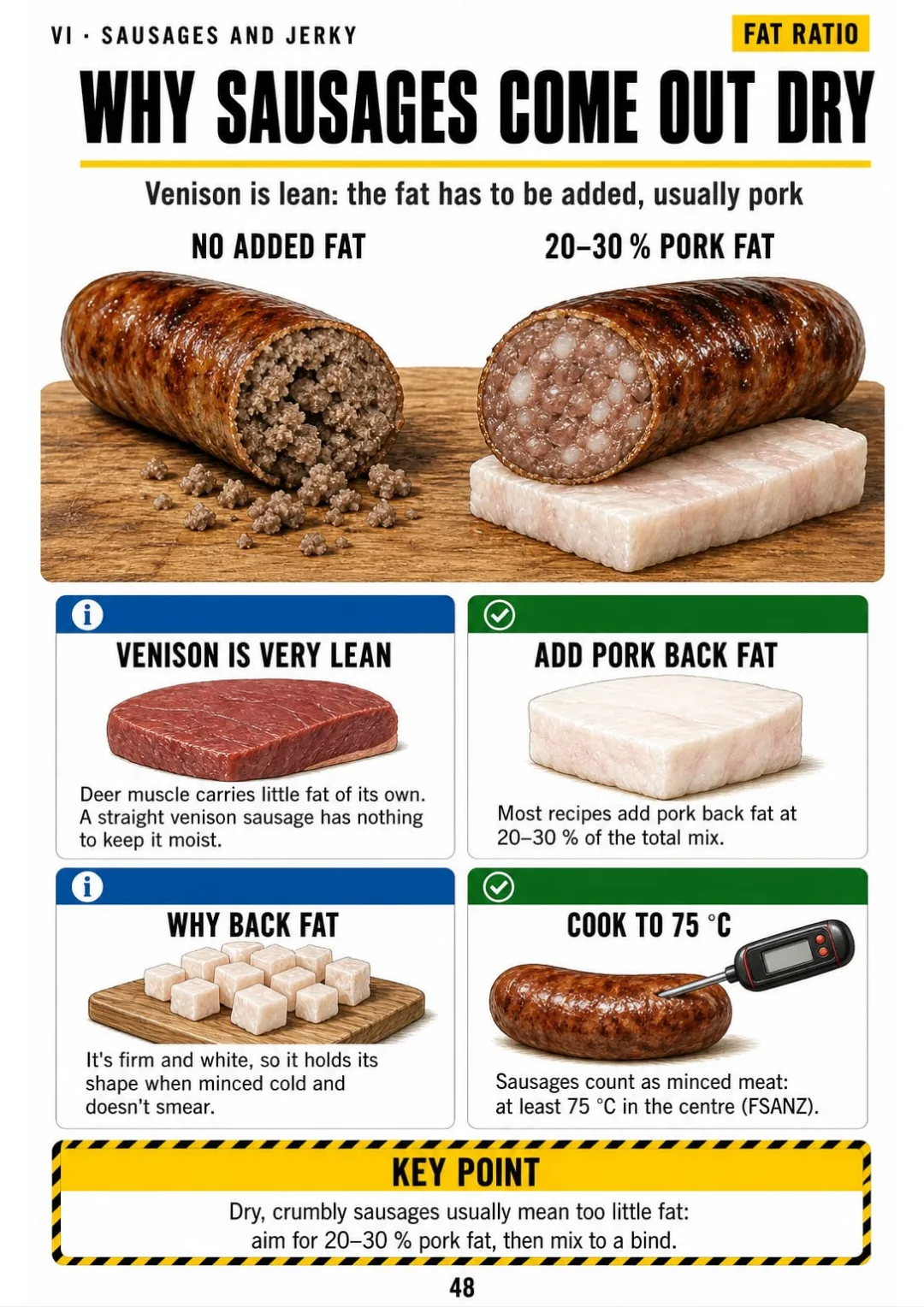
Pork back fat at 20–30 % of the mix keeps venison sausages juicy
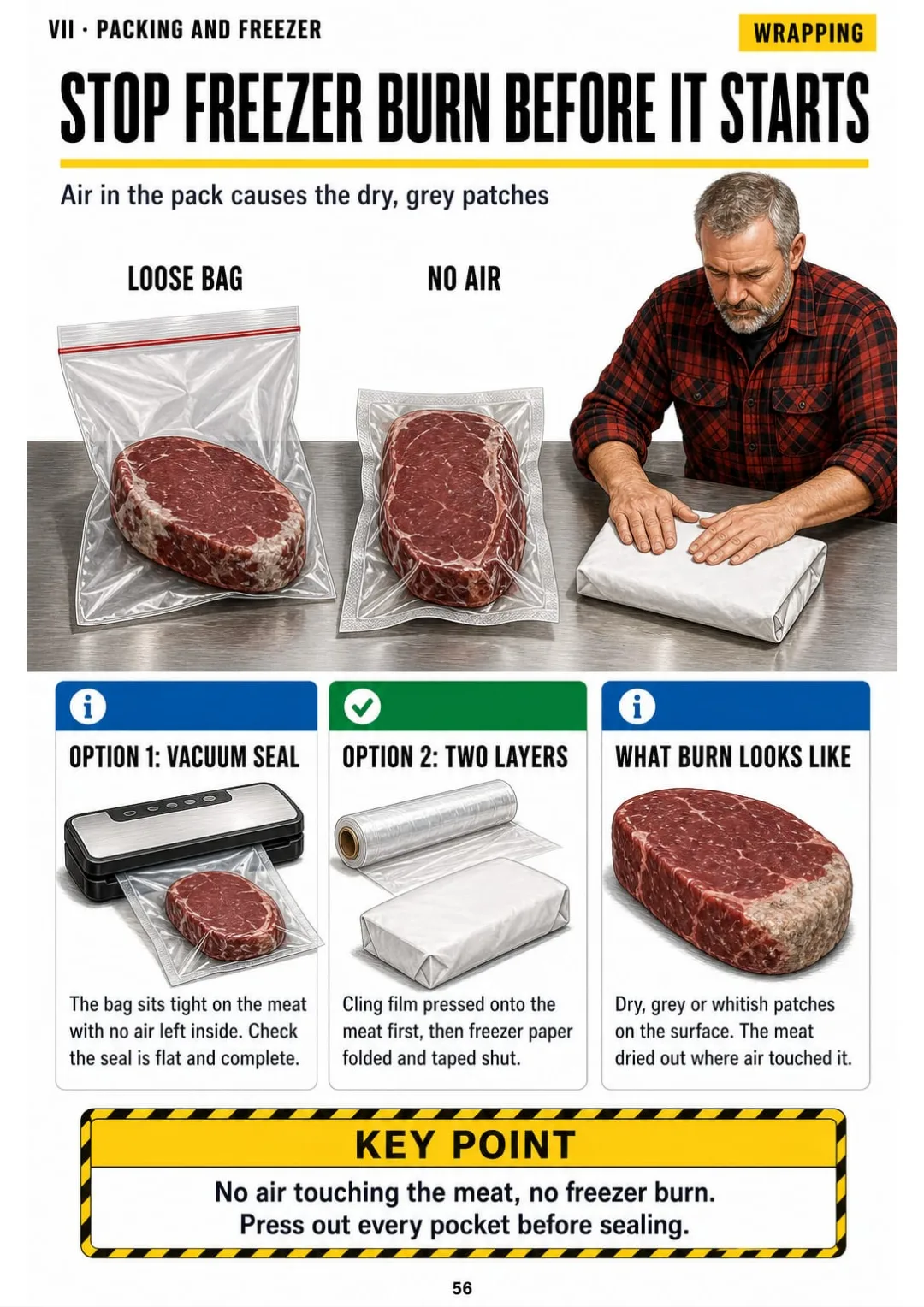
Vacuum seal, or cling film then freezer paper: no air, no grey patches.
Field checklist: dress early, trim gut contact, bag it, cool deep muscle to 7 °C within 24 hours.

Swipe to see more →

These are real pages from the book. The table of contents is the full one: 8 parts and 62 topics.

The Problem Isn't You. It's How It Was Explained.

You're in the garage with the hindquarters and backstraps out of the esky. The fridge is full, and you need to know if the meat is cold enough to break down tonight or should go back on ice.

The answer is in there somewhere, buried in a long food-safety page: danger zones, cooling rates, paragraph after paragraph. Nobody tells you where the probe goes or what number to look for.

Primals on a rack, uncovered, 2–5 days at 1–4 °C, then trim the dried layer

In the book, Chill It and Check It is one page: the hindquarter drawn with the probe going into the thickest part, and a box beside it. Deep muscle at 7 °C or below within 24 hours. Core at 1–4 °C before you break it down.

The rest works the same way. The warm-weather first hour, the sambar cut map, the three-tub trim system, the sausage fat ratio and freezer burn each have a page of their own.

You look at the page, probe the meat and know what comes next, without going back to a manual.

COMPARE FOR YOURSELF

The Same Job, Two Ways to Learn It

THIS
  • The manual: line after line
  • Cooling and cutting explained only in words
  • You get to the carcass still unsure
Following the harvest of the animal, carcass temperature remains elevated for an extended period, during which microbial proliferation may occur at an accelerated rate within the range commonly referred to as the temperature danger zone, generally described as lying between 5 °C and 60 °C. Accordingly, evisceration or removal of the primal portions should be undertaken without undue delay, and the deep muscle tissue reduced to 7 °C or below within approximately 24 hours, with due regard to ambient conditions, shade, airflow and the thickness of the hindquarter musculature.
FOR THIS
  • The first hour in one drawing
  • The temperatures and times in a box
  • You see it and you get it
Danger zone 5–60 °C · NSW hunter-ed target: deep muscle 7 °C or less within 24 hours
CONTENTS

Take a Look at the 8 Parts and 62 Topics

The kit and set-up, the warm-weather first hour in the field, cooling and breaking down at home, the cuts species by species, trim and mince, sausages and jerky, packing and the freezer, and the checklists: 66 pages, all illustrated

IThe Kit and the Set-Up · pp. 5-11
  1. The Same Order, Every Animal
  2. The Three Knives You Actually Need
  3. Keeping an Edge on the Job
  4. Hygiene Kit and Your Own Health
  5. The Field Pack
  6. The Home Station
  7. Rules, Remains and Household Use
IIIn the Field: The Warm-Weather First Hour · pp. 12-23
  1. The Clock Starts at the Shot
  2. Reading the Day: 27 °C or 12 °C?
  3. Check the Animal Before You Start
  4. Gutless Method, Step 1: Open the Hide
  5. Gutless Method, Step 2: The Backstrap
  6. Gutless Method, Step 3: The Hindquarter
  7. Gutless Method, Step 4: Shoulder and Neck
  8. Gutless Method, Step 5: The Tenderloins
  9. Whole Field Dressing, in Order
  10. Shot Damage and Trim
  11. Game Bags and Shade
  12. Packing the Esky
IIICooling and Breaking Down at Home · pp. 24-31
  1. Chill It and Check It
  2. Hang It or Bone It Out?
  3. Ageing Primals in the Fridge
  4. Hair Off, Surface Clean
  5. Breaking the Hindquarter Along the Seams
  6. Breaking the Shoulder
  7. Neck, Ribs and Flank
  8. Cutting Shanks for Slow Cooking
IVThe Cuts, Species by Species · pp. 32-41
  1. Sambar Cut Map
  2. Fallow Cut Map
  3. Red Deer Cut Map
  4. Sambar, Fallow, Red: Side by Side
  5. The Backstrap
  6. The Tenderloin
  7. Topside and Silverside
  8. Knuckle and Rump
  9. Reading the Grain
  10. Worked Example: Yield in Kilograms
VTrim and Mince · pp. 42-47
  1. Why Venison Mince Tastes Strong
  2. The Three-Tub System
  3. Keep the Trim Cold
  4. Grinder Set-Up
  5. Adding Fat to Mince
  6. Burger Patties
VISausages and Jerky · pp. 48-55
  1. Why Sausages Come Out Dry
  2. Worked Batch: 5 kg at 75/25
  3. Mixing to a Bind
  4. Casings and Stuffing
  5. Linking and Resting
  6. Slicing for Jerky
  7. Jerky: Heat, Then Dry
  8. Storing Jerky
VIIPacking and the Freezer · pp. 56-62
  1. Stop Freezer Burn Before It Starts
  2. The Label That Saves You Later
  3. Pack Sizes for a Household
  4. Freeze Fast
  5. The Freezer Map
  6. Thawing Safely
  7. Cook-Temperature Reference
VIIIChecklists and Common Mistakes · pp. 63-66
  1. Field Checklist
  2. Home Processing Checklist
  3. The Most Frequent Mistakes
  4. Cooling and Freezer Log

One Page, One Topic, All Clear

Think of it this way:

It's Sunday afternoon. A fallow is in the esky, the hindquarter is on the bench, and you need to know where the topside ends and the silverside begins.

You open the Topside and Silverside page and the hindquarter is drawn with every seam marked, plus the cut that comes away on each side.

Fat, silverskin, sinew, hair and bloodshot meat: the five things that make venison mince taste strong

The backstrap, the sambar cut map, the three-tub system, the 5 kg sausage batch at 75/25 and the freezer map work the same way. Each one is on its own page.

Home Deer Butchery Illustrated has 66 illustrated pages in 8 parts: 62 topics, each on its own page. At the end you get field and home checklists, the most frequent mistakes and a blank cooling and freezer log.

What you see drawn, you don't have to memorize.

What's Inside Home Deer Butchery Illustrated:

Ipp. 5-11

The Kit and the Set-Up

The same order for every animal, the three knives you need, keeping an edge, the hygiene kit, the field pack, the home station and household-use rules.

IIpp. 12-23

In the Field: The Warm-Weather First Hour

The clock from the shot, reading a hot or cool day, the gutless method in five steps, whole field dressing, shot damage, game bags, shade and packing the esky.

IIIpp. 24-31

Cooling and Breaking Down at Home

Chilling and probing, hanging or boning out, ageing primals in the fridge, a clean surface, breaking the hindquarter on the seams, the shoulder, neck, ribs, flank and shanks.

IVpp. 32-41

The Cuts, Species by Species

Cut maps for sambar, fallow and red deer, the three side by side, backstrap, tenderloin, topside, silverside, knuckle, rump, reading the grain and yield in kilograms.

Vpp. 42-47

Trim and Mince

Why venison mince tastes strong, the three-tub system, keeping trim cold, setting up the grinder, adding fat and making burger patties.

VIpp. 48-55

Sausages and Jerky

Why sausages come out dry, a worked 5 kg batch at 75/25, mixing to a bind, casings, stuffing, linking, then slicing, drying and storing jerky.

VIIpp. 56-62

Packing and the Freezer

Stopping freezer burn, the label that helps you later, pack sizes for a household, freezing fast, the freezer map, safe thawing and cooking temperatures.

VIIIpp. 63-66

Checklists and Common Mistakes

Field checklist, home processing checklist, the most frequent mistakes and a cooling and freezer log ready to fill in.

At the end of the book: Worked examples in kilograms, field and home checklists, the most frequent mistakes and a blank cooling and freezer log.
Plus: 2 Free Books

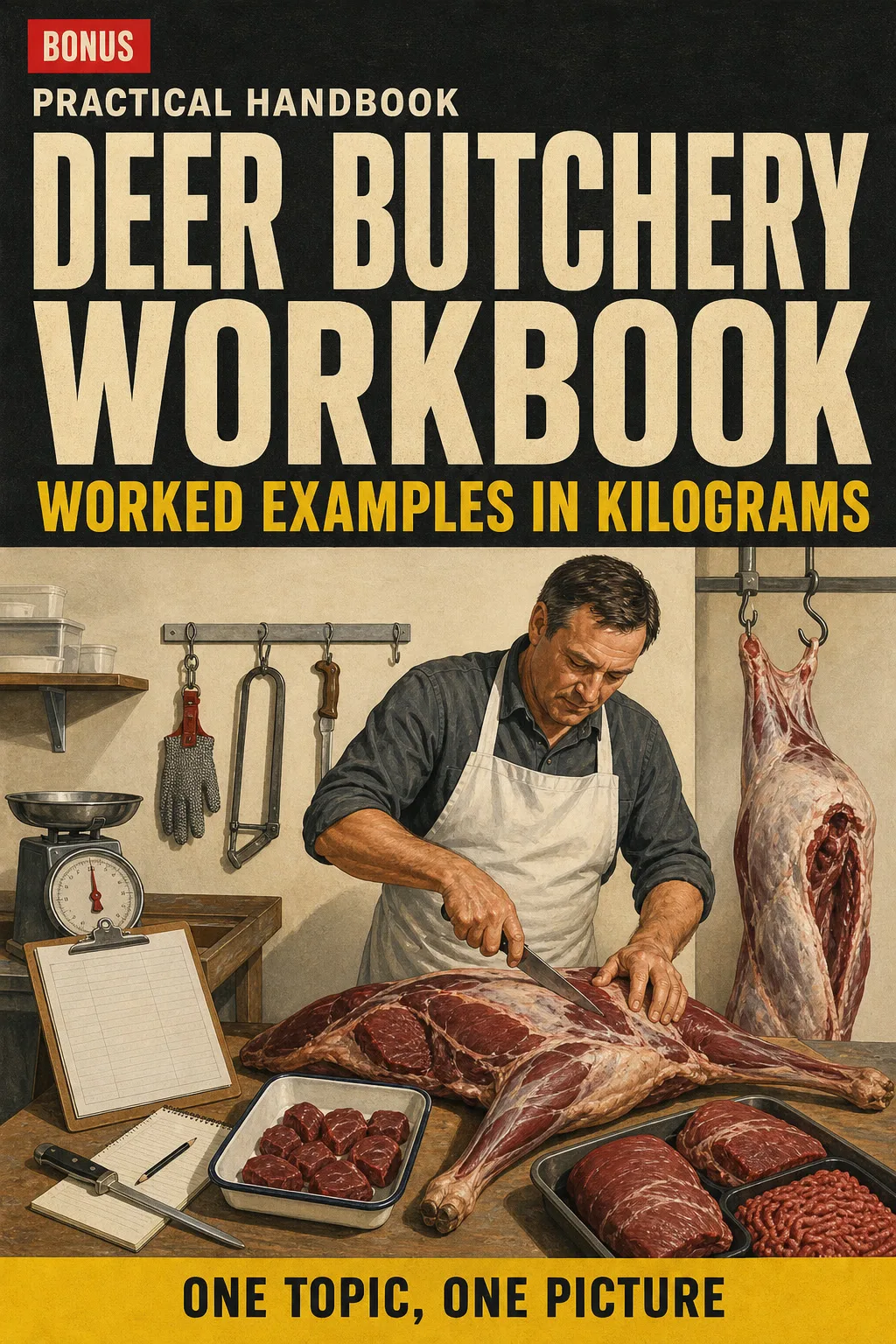
Deer Butchery Workbook: Worked Examples in Kilograms

BONUS 1: «Deer Butchery Workbook: Worked Examples in Kilograms»

Value on its own: US$ 17.90

Practise the numbers before the next animal: carcass yield, trim for mince, fat ratios and sausage batches, worked step by step with answers.

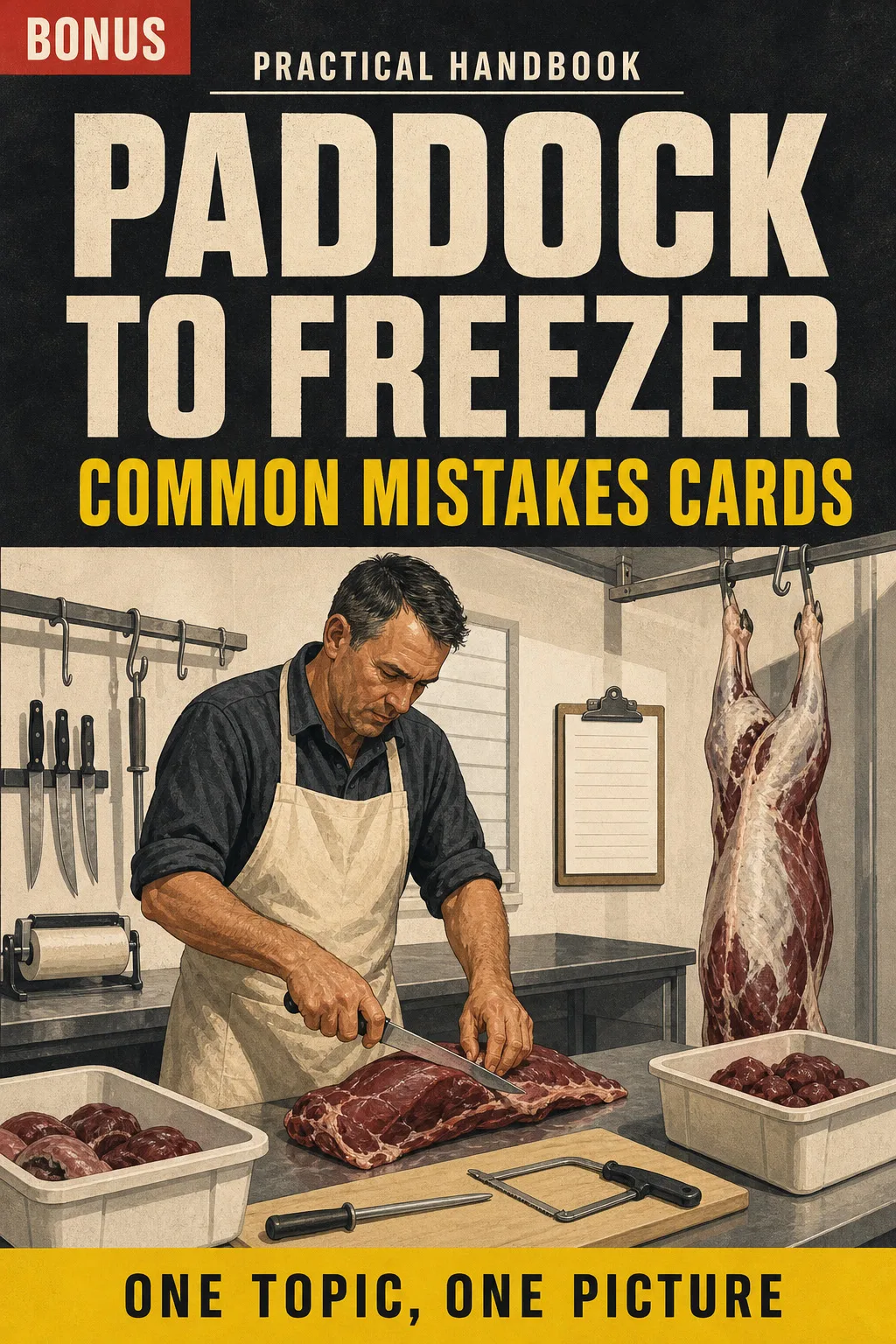
Paddock to Freezer: Common Mistakes Cards

BONUS 2: «Paddock to Freezer: Common Mistakes Cards»

Value on its own: US$ 14.90

The most frequent mistakes, from a warm carcass to freezer burn, each one drawn before and after on a card you can print and keep in the shed.

Home Deer Butchery Illustrated with 2 Free Books

  • Home Deer Butchery Illustrated: 66 illustrated pagesUS$ 63
  • BONUS 1: Deer Butchery Workbook: Worked Examples in KilogramsUS$ 17.90
  • BONUS 2: Paddock to Freezer: Common Mistakes CardsUS$ 14.90
  • High-resolution PDF to printIncluded
Total value US$ 95.80
YOUR PRICE:
US$ 27
You save US$ 68.80
YES, I WANT HOME DEER BUTCHERY ILLUSTRATED FOR US$ 27

📄 This is a digital PDF book sent to your email: nothing is printed or shipped.

Secure purchaseEncrypted payment30-day guarantee

PDF by email: We email you Home Deer Butchery Illustrated as a PDF, together with the two free books. It's a single payment: no installments, no extra charges.

Who This Book Is For

You've always used a processor

You've always used a processor

Every stage is drawn in order, from the field to the freezer, so you can take the next sambar or fallow home and do the whole job yourself.

There's a hunt this weekend

There's a hunt this weekend

The first hour in warm weather, the cooling targets and the field checklist sit on a few pages you can print and keep in the ute.

You already process at home

You already process at home

The cut maps, the trim system and the sausage fat ratio show you why the mince tastes strong or the sausages come out dry, and how to fix it.

Everything You Get Today

US$ 95.80US$ 27
YES, I WANT HOME DEER BUTCHERY ILLUSTRATED FOR US$ 27

📄 This is a digital PDF book sent to your email: nothing is printed or shipped.

30DAYS
GUARANTEE

30-Day Guarantee

Try Home Deer Butchery Illustrated for 30 days, bonus books included.

We refund everything if the file won't open, if the book isn't what you see here, if you were charged twice or if the email doesn't arrive. Just email us.

You pay once. No subscriptions.

Frequently Asked Questions

Is it for me if I've been hunting for years?

Yes. It isn't a beginner's book. It gives you one fixed order for every animal, cut maps for sambar, fallow and red deer, and the numbers in °C and kilos, not pounds. The drawings are clean line art: no blood and no gore. The cut maps use a plain outline of the animal.

Where does the content come from?

Temperatures and times are checked against current consumer food-safety guidance from Food Standards Australia New Zealand. The Australian Standard on wild game meat hygiene (AS 4464) is used as a reference for hygiene principles. State hunting rules are named only to describe them.

Is it official material?

No. It's an independent illustrated guide. It isn't affiliated with or endorsed by any regulator or standards body.

Does it replace a course or hands-on training?

No. It's a home reference for processing game for your own household. It doesn't replace hands-on training or current food-safety advice, and it isn't a guide to processing meat for sale.

Are the workbook exercises taken from a course?

No. The worked examples in kilograms were written for this book.

When and how does it arrive?

As a PDF by email, sent to the address you enter at checkout. The 2 bonus books come the same way.

Do I have to pay every month?

No. It's a one-off payment.

Can I have it on paper?

Yes. The PDF is made to print, so you can keep the pages you use most in the shed or the garage.

How does the refund work?

You have 30 days. We refund everything if the file won't open, if the book isn't what you see on this page, if you were charged twice or if the email doesn't arrive: just email us.

Before You Close This Page

No more rereading something that's gone by the next animal.

No more guessing where the topside ends and the silverside begins.

You get to the carcass knowing where everything is.

Drawings make studying faster.

The book is right below.

One-time payment: US$ 27 · Guarantee: 30 days · PDF by email

YES, I WANT HOME DEER BUTCHERY ILLUSTRATED FOR US$ 27

📄 This is a digital PDF book sent to your email: nothing is printed or shipped.